CHECK VALVE FUNCTIONALITY
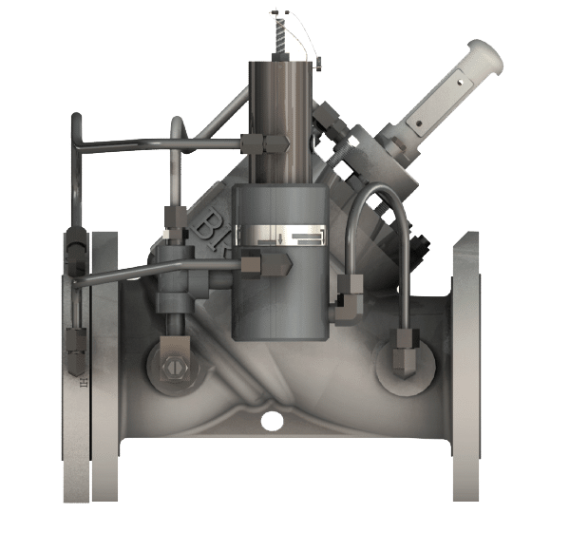
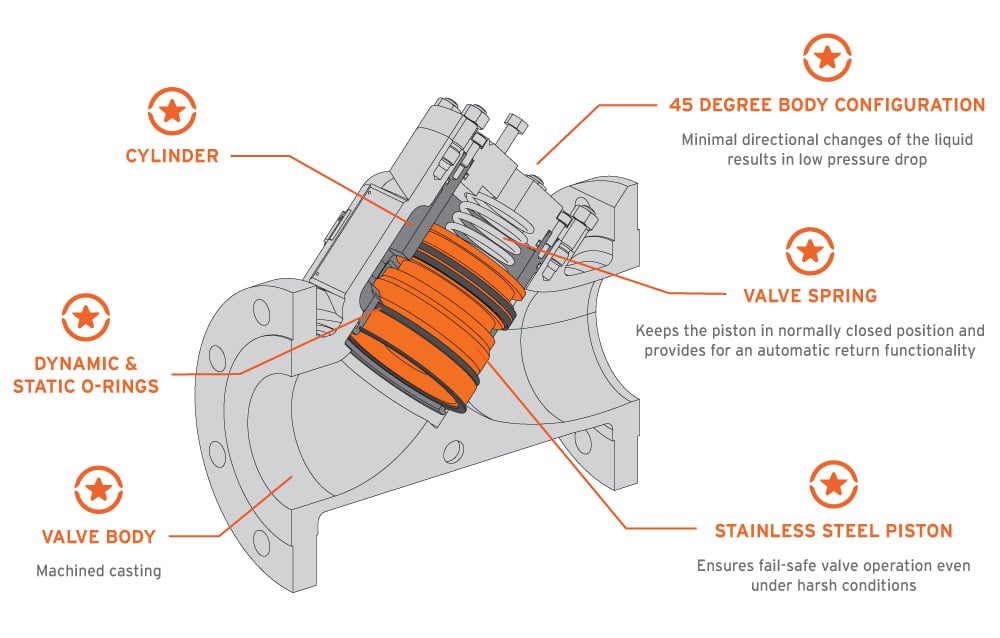
The valve piston spring, biased to the closed position, has equal front and rear surface areas. This means that every Brodie Model BV valve has check valve functionality, with bubble-tight shut-off – no additional system check valve is required to prevent reverse flow. The valve will only open when upstream pressure is sufficient to overcome spring force.
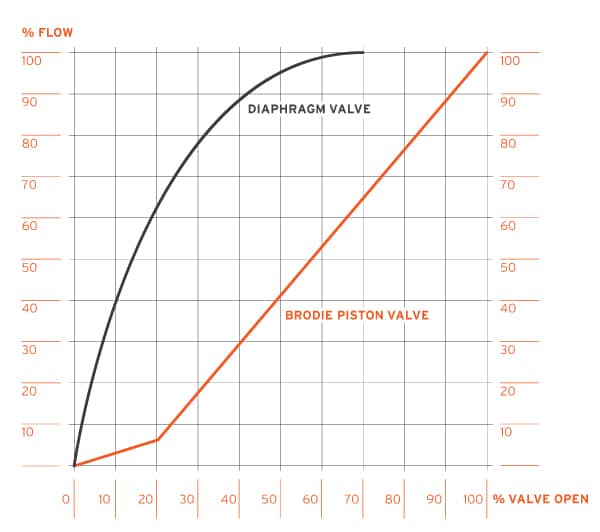
BRODIE VS DIAPHRAGM VALVES
There are many advantages in using piston-operated control valves as opposed to diaphragm-operated valves, including:
- High flow capacity – lower pressure drop
- Optimum control at low flow gives better batching control
- Simple O-ring sealing – no special diaphragms
- Alternative O-rings easily obtainable per product specifications